
Showing posts with label public intellectuals. Show all posts

Religion at the Ninth Annual Meeting of the Society for U.S. Intellectual History


Image result for 9th annual s-usih conference
I did not attend all of the panels on religion at the Ninth Annual Meeting of the Society for U.S. Intellectual History. My brief reflections here are in response to the panels I did attend (including my own) but I also make mention of the many projects of interest to our readers. I left with two questions and bring attention to two trends.

 S-USIH offers a space for historians of religion from various organizations – the ASCH, the ACHA, the AAR, etc.  – to meet and explore common interests. The common thread at the 9th Annual S-USIH is an interest in how the study of religion overlaps with the study of thought more broadly.


Two Questions: Synthesis and Lived Religion

Related image
The Mapparium 
Can intellectual history provide us with tools to build a coherent narrative of America’s religious history even in the face of tremendous pluralism? What themes can intellectual history offer historians of religion? Panels offered familiar conceptual devices to gather religion under the umbrella of “Civil Religion” or “The Public Sphere.” Papers approached these canopies from a diversity of angles. Sarah Georgini considered the message sent by the Christian Scientists with the construction of the Mapparium. Her paper made the important point that the craftsmen and architects who labored to materialize a religious vision are the subjects of American intellectual history. David Mislin examined the concept of evil in liberal Protestants’ midcentury theology. Rachel Gordon analyzed middlebrow Jewish literature published in the 1940s and 1950s, weighing its effects on Jewish citizenship. In a panel on Civil Religion, audiences explored John Foster Dulles’s Manichean worldview (John D. Wilsey); the supra-national thought of Jerry Falwell (James M. Patterson); Congress placing “In God We Trust” on its rostrum to spite the Supreme Court’s decision in Engel v. Vitale (Fred W. Beuttler); Protestants and Catholics using human rights language to shape politics in Latin America (Lauren F. Turek); and a linguistic analysis of American exceptionalism from George W. Bush to Barack Obama (Hilde Eliassen Restad). Pluralism, one of the cornerstones of our field, was on full display in Dallas. Panels ran across the denominational (Presbyterians, Jews, Catholics, Christian Scientists) and trans-denomination (evangelical, liberal protestant) axes. Panels also implied that “anxiety” and “crisis” shaped religious life in the US. A panel featuring Daniel Williams, John Compton, and Benjamin Leavitt – chaired by Molly Worthen – considered mid-century religious thought in an “Anxious Age.”

Image result for congress rostrum in god we trust
In God We Trust, Congress's Rostrum 
We might permit ourselves a moment to dwell on the ability of intellectual history to bring the congeries of religious history under a synthetic roof.  All of these religions enter into public space from their own institutional positions. Hence, there is utility in bundling religion into a broader Public Sphere or a Civil Religion.


We might also dwell on how religious pluralism feeds into the broader theme of “The Culture of Democracy.” James Kloppenberg’s Toward Democracy makes the case that the ethical teachings of Christianity, and the small Protestant towns of New England, facilitated the rise of our current democratic political horizons. Papers by Benjamin E. Park, Matthew Bowman, and Lily Santoro considered “Protestant Democratic Culture,” “Civic Religion,” and the concept of “Fit Christian Citizens.” My own paper looked at how Catholics fit into culture of democracy: culture, meaning a series of practices, ideas, and ideals to work towards.Gale Kenny ended a roundtable on the state of the field of religious history with a provocative question: is US Intellectual History Protestant history? 

How will intellectual historians address the issues raised by historians of lived religion? The theory of lived religion – and its emergence out of archival sources – poses a serious epistemological challenge to intellectual historians. Cultural history dwells on the incongruous nature of religion or its eclectic nature. Religious thoughts are seen as provisional and experimental. At the state of the field panel, Erin Bartram raised the question about the relationship between sources in the intellectual history canon where religion appears organized and sources like diaries in which subjects feed off multiple fonts of religious ideas.  The panel considered the issue at length but never shied away from the suggestion that the archives – and certain methods of social history – are a boon to intellectual history and the history of religious thought. Rendering religion into a systematic body of thought with the tools of intellectual history remains a productive endeavor for our field and for understanding religion more broadly. Dan Hummel’s paper raised the question of how the historian of religion – while “taking religion seriously” – also considers how religion is shaped by other realms of behavior: social, cultural, economic, and political.  Ben Wright responded with a question of what it might mean to be seduced by religious subjects who wanted the people around them to think they were religious. The state of the field panel considered how to balance the fairly streamlined content of doctrine next to the messiness of religion in the lives our subjects. How should intellectual historians approach these problems?

Trends: International History and Gender 

American religion is very much “out in the world,” as panels in Dallas amply demonstrated.  S-USIH conference presenters operate in the jet stream of Andrew Preston’s Sword of the Spirit, Shield of Faith: Religion in American War and Diplomacy and David Hollinger’s Protestants Abroad: How Missionaries Tried to Change the World but Changed America. Woodrow Wilson’s social gospel now plays an important role in American empire (Cara Burnidge), missionaries imbued science in Hawaii with the divine (Tracy Laevelle), and religion, of course, also challenged empire (Ray Haberski). As mentioned above, Lauren Turek’s work brings the fields of American religion and international human rights history into conversation. Emily Conroy-Krutz’s paper on the state of the field panel considered how recent books by Christine Heyrman and Michael Altman study religion abroad to illumine religious issues in America. Conroy-Krutz makes the important point that recent scholarship has portrayed missionaries both as purveyors of bias and important sources of cosmopolitanism.  The subjects we study in the field of American religious history go out into the world and think about a wide range of issues. Religion is exported as well as imported.
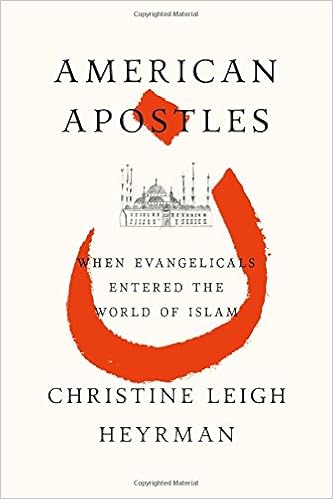


Image result for mike altman hindooImage result for christine heyrman islam

Women’s and gender history intersected with long-standing research trends in the field of American Intellectual and religious history.  These approaches are producing new insights into old questions. Erin Bartram offered an analysis of how gender shapes the construction of the female self in the nineteenth century. Religion and religious questions are involved in the construction of the self and the recognition of boundaries between the individual and society. Elesha Coffman discussed the ways the legacy of Betty Friedan occluded historians’ understandings of Margaret Mead, the subject of her new book Oxford’s Spirited Lives series. Andrea Turpin’s paper considered women from both sides of the Fundamentalist-Modernist controversy. Elizabeth H. Flowers asked why women were so involved in spreading the doctrine of inerrancy in the late twentieth century. Karen K. Seat looked at how ideas of women’s labor helped to explain the general turn towards neo-conservative policy during and after the Reagan era. These papers demonstrated that women thinkers and ideas about gender shaped key trends in American history: the rise of the self, fundamentalism, the rise of the right, second wave feminism, and neoliberalism.



spacer

"It Isn't Entirely Unfortunate Rhetoric"

Elesha Coffman

As part of my research on Margaret Mead, I've been reading a stunning book with the totally 1971 title A Rap on Race. The book is the transcript of a series of conversations between Mead and James Baldwin, touching on race, religion, politics, culture, and more. In honor of the new movie I Am Not Your Negro, the audio has been posted on YouTube. The blog "Brain Pickings" features several sets of quotations, including this one on religion. I'm finding it equally thrilling and disturbing how current the conversation sounds, with its warnings about urban violence, the collapse of a sense of community, the perils of unchecked consumption, and persistent tensions surrounding immigration. Here's a portion that reminded me of Ross Douthat's Feb. 4 New York Times column, in which Douthat wondered how those who praise the Great White Men of U.S. history and those who seek to bury them might ever share a vision of America.

Mead: Well we still think ... have the sort of notion, as expressed in Felicia Hemans' poem, "Ay, call it holy ground,  The soil where first they trod! They have left unstained what there they found--Freedom to worship God."

Baldwin: That is very unfortunate rhetoric.

Mead: It isn't entirely unfortunate rhetoric. When Kruschev came to this country, somebody thought up a radio program of books we would like to send him so he could understand the United States. I picked this poem to show how people in the United States associate religion with freedom. That's what they associate it with; that's what they talk about all through middle America: "Right to go to my church and nobody is going to stop me!" The Russians associate religion totally with oppression. It is a very different picture and it got pickled in these early days when there were so many religious refugees of one sort or another. So this is part of our image of what is American, yours and mine, because our ancestors came here together. We share a notion of a kind of people that formed the ideals of this country and the ideals against which we have always been measuring the country and finding it faulty. But the ideals were here. I mean, Jefferson did postulate ideas of democracy that one could follow.

Baldwin: Yes, but he also owned slaves.

Mead: Sure he did. But he set down statements on the basis of which one could fight for the vote for everybody in this country. The fact that he owned slaves is one thing. The principles he laid down are something else. You can call it rhetoric, but I don't believe you really believe these things are just rhetoric. They made it possible for us to go further and have better dreams. But you see, we have now an enormous amount of people in this country who didn't come here to dream. They didn't have dreams, except just security for their children. And these are the people that we call the silent majority and they are terribly frightened.

Baldwin: Yes, their fear frightens me.

Mead: They are terribly easy to frighten, and their fear is frightening. Though all fear is frightening, and certainly all groups that are frightened are frightening.

Baldwin: Because it may be that their fear will precipitate the kind of social chaos which no society can really survive. This fear can result in a kind of convulsion of apathy.

Mead: I don't think that there is so much apathy. I think there is an enormous lack of knowledge of what to do about anything. There is an enormous sense of frustration, and people feel so strongly in this country that you ought to be able to fix at once anything that goes wrong. Press a button and something happens. Then they try to manage our political system or our economic system in the same way.

I must not be the only person who finds this book valuable, because the current prices for used copies on Amazon are astronomical. It was once a mass-market paperback (my library copy was published by Laurel, a division of Bantam Doubleday Dell, copyright J.B. Lippincott 1971, printed 1992; I quoted from p. 143-145). I think it's time for a new edition.
spacer