Showing posts with label democracy. Show all posts

CFP: Graduate Student Conference on Democracy and Religion

Lauren Turek

I would like to share the following call for papers that I received. This conference looks fantastic and would be an excellent opportunity for graduate students of all levels.

Call For Papers:
Graduate Student Conference on Democracy and Religion

University of Virginia, April 12, 2019

The UVA Department of Religious Studies’ Forum on Democracy and Religion invites paper proposals for a graduate student conference to be held on April 12, 2019. Graduate students at any level and in any disciplinary field are welcome to apply.

Our focus will be on the relationship between democracy and religion. We are particularly interested in such issues as: the current contest between free exercise and human dignity; the shifting sites of the “public square,” including its market dimensions; the relationship between neoliberalism and international religious freedom; how discussions of religious minorities, race, and gender shape what we mean by religion and democracy; and whether democracy needs religion or what kind of religion needs democracy.

Paper proposals should be no less than five pages long, exclusive of notation. Full papers are preferred. Panel proposals are welcome but not necessary. Panel participants will receive a $500 honorarium.

Paper selection will begin January 25th, 2019, and continue until the program is announced and panelists notified, no later than March 15. Please send all proposals by email attachment to Spencer Wells, Executive Assistant for the Forum on Democracy and Religion, at spencerwells@virginia.edu

spacer

Democracy, Higher Education, and the Problem of the Common Good

Andrea L. Turpin

A month ago I attended two national conferences on back-to-back weekends: the Society for U.S. Intellectual History (USIH) met October 26-29 in Dallas, TX and the History of Education Society (HES) met November 2-5 in Little Rock, AR. A week and a half of intensive immersion in the current scholarship of two overlapping fields made some common themes jump out. (And also produced fascinating insights into the variable quality of Marriott hotels. But I digress.)

Specifically, I was struck by historians' interest in two topics: the concept of the common good and the problem of how values are, or are not, transmitted to the next generation. I suspect these themes jumped out at me in part because they seem so salient in the current widespread breakdown of civil dialogue. Both of these lenses prove helpful for producing a clearer understanding of U.S. history, especially U.S. religious history—and for seeing how best to frame that history for our students today.

The question of the common good was raised most forcefully in a pair of book panels, one from each conference. USIH dedicated a plenary session to James Kloppenberg’s monumental work Toward Democracy: The Struggle for Self-Rule in European and American Thought (Oxford, 2016). A fair amount of the panelist and audience questions revolved around the role of religious beliefs, past and present, in forming and sustaining democracy. In answer to one of these questions, Kloppenberg articulated his conviction that some conception of the common good is necessary to ground democracy; otherwise politics becomes a zero-sum game. He asserted that historically democracy in the North Atlantic world grew in large part from Jewish and Christian roots—but that most religious and moral systems advocate some version of the golden rule that provides democracy’s necessary ethic of reciprocity. Therefore, democracy can certainly thrive in a climate of religious pluralism, but he fears it might not survive a devolution of belief in our responsibility as individual citizens to advance the common good. (Though Kloppenberg noted that he is by temperament a cautious optimist about our nation’s ability to rally around this ideal more robustly in the future.)


The question thus arises how past generations of Americans have successfully produced a commitment to the common good—and how we can do so again today. A partial answer comes from the book panel hosted by HES the next week on Charles Dorn’s For the Common Good: A New History of Higher Education in America (Cornell, 2017). Dorn’s book examines the different purposes higher education has served throughout American history—but notes that inculcating civic-mindedness has been present throughout. Instilling in students concern for the public welfare has, however, often been eclipsed by competing purposes. Those he details are the ideals of practicality, commercialism, and affluence. In other words, higher education has frequently been largely valued as an avenue to some sort of worldly success—which makes sense, considering how expensive it can be in terms of both money and time. Nevertheless, the existence of a through line of commitment to the common good among higher educational institutions throughout American history provides a rich heritage for contemporary colleges and universities to draw on.

Dorn also served as one of the commentators for the HES panel on my book, A New Moral Vision: Gender, Religion, and the Changing Purposes of American Higher Education, 1837-1917 (Cornell, 2016). He rightly noted that I too perceive the question of the nature of the public welfare to have loomed large in the educational debates that underlay our current college and university landscape. He put the question to me of whether the common good was solely in the eye of the beholder during the fractious discussions about the respective roles of gender, religion, and class in higher education that I analyze—or whether there was some criteria that educational founders, leaders, administrators, and boosters could have used to better adjudicate competing claims.

In many ways this is THE question I believe we have to answer as educators today. I responded that for past educators it seems to have been relatively easy to agree that colleges and universities should serve the public good, less easy to agree on the exact nature of that good, and harder still to agree on how to achieve it. Specifically, I think it is fair to say that both past and present Americans have agreed on many common goods plural, but that it has been much harder to agree on their ranking, and hence on which policies, both educational and political, best serve the nation. Additionally, my findings led me to conclude that it is nearly impossible for any one type of institution to do equally well by all types of students. The institutional pluralism of modern American higher education thus indeed seems best for a pluralistic nation. Yet if all these institutions seek to orient their students toward a common good—even if they do not agree on its exact nature—graduates will be primed for the process of democratic discussion.

But how can we know if students have internalized the moral vision their institutions have cast? I care about this question both as a historian and as an educator. I venture an answer in my book with respect to the institutional histories discussed there, but I also note that the question is notoriously difficult. I was therefore delighted to hear scholars at both conferences wrestling with the question of transmitting values. This theme was rarely the topic of an entire panel, but frequently appeared within individual papers. Collectively these papers indicate that attempts to transmit values to the next generation have often been mediated by educational institutions, religious institutions, or both. They have likewise been bound up in the tension between serving a particular religious community and serving the wider community:

Pete Cajka noted how the nineteenth-century U.S. Catholic school system sought both to preserve the faith and to form citizens. Benjamin Park noted how both Catholics and Mormons of that era shared a concern to stabilize American democracy by grounding Christian values in a religious hierarchy that could constitute a court of final appeal throughout time. I highlighted in my USIH presentation considerable concern within early twentieth-century mainline churches for how to retain the involvement of a new generation of college-educated women who were finding more opportunities for their talents outside the church. John Compton examined how J. Howard Pew’s father tightly controlled his education to inculcate in him a more conservative view of the relationship between Christianity and economics than characterized the bulk of his fellow Presbyterians. Daniel Williams noted how mid-twentieth century mainline apologists sought to defend Christianity not primarily for its own sake, but rather because they believed its values sustained the democratic political order.  Mario Rewers determined that students of the pioneer American studies classes actually valued and internalized their intended lessons in critical thinking. Elesha Coffman described how Margaret Mead wrestled with the problem of revising the baptismal liturgy of the Episcopal Church: if it changed too much, it wouldn't pass on the essence of the faith to the next generation, but if it didn’t change enough, that new generation would refuse to receive it. Matthew Bowman discussed how Robert Bellah’s concern with cults—very successful at transmitting their values and beliefs—focused on their separatist lack of interest in the common good. And Milton Gaither detailed what factors have correlated with successfully transmitting religious beliefs to the next generation and analyzed why the contemporary homeschooling movement did not actually succeed in doing so at a higher rate than average.

So where does all this leave me in my dual roles of historian seeking to understand changing American religious and moral values and educator seeking to instill in my students a desire to pursue the common good? I would say these conferences have challenged me to think more carefully in my own scholarship about how generational continuities and changes occur within educational and religious communities. And they have encouraged me to frame my teaching even more clearly around the pursuit of a common good throughout American history.

Perhaps there is hope: I stole an end-of-semester exercise from my colleague Elesha Coffman and asked students to list (anonymously) one thing they’ll do differently as a result of the class. Student answers included: “After this class, it will be easier for me to understand/appreciate others’ opinions,” “I cannot allow assumptions, fear, or ignorance to cloud my perspective,” “Be careful when discussing certain topics and always do my research first,” and, finally, “What I will do differently is analyze presidential candidates from a more unbiased, neutral perspective rather than putting them exclusively in the box of their political party.”
spacer

Religion at the Ninth Annual Meeting of the Society for U.S. Intellectual History


Image result for 9th annual s-usih conference
I did not attend all of the panels on religion at the Ninth Annual Meeting of the Society for U.S. Intellectual History. My brief reflections here are in response to the panels I did attend (including my own) but I also make mention of the many projects of interest to our readers. I left with two questions and bring attention to two trends.

 S-USIH offers a space for historians of religion from various organizations – the ASCH, the ACHA, the AAR, etc.  – to meet and explore common interests. The common thread at the 9th Annual S-USIH is an interest in how the study of religion overlaps with the study of thought more broadly.


Two Questions: Synthesis and Lived Religion

Related image
The Mapparium 
Can intellectual history provide us with tools to build a coherent narrative of America’s religious history even in the face of tremendous pluralism? What themes can intellectual history offer historians of religion? Panels offered familiar conceptual devices to gather religion under the umbrella of “Civil Religion” or “The Public Sphere.” Papers approached these canopies from a diversity of angles. Sarah Georgini considered the message sent by the Christian Scientists with the construction of the Mapparium. Her paper made the important point that the craftsmen and architects who labored to materialize a religious vision are the subjects of American intellectual history. David Mislin examined the concept of evil in liberal Protestants’ midcentury theology. Rachel Gordon analyzed middlebrow Jewish literature published in the 1940s and 1950s, weighing its effects on Jewish citizenship. In a panel on Civil Religion, audiences explored John Foster Dulles’s Manichean worldview (John D. Wilsey); the supra-national thought of Jerry Falwell (James M. Patterson); Congress placing “In God We Trust” on its rostrum to spite the Supreme Court’s decision in Engel v. Vitale (Fred W. Beuttler); Protestants and Catholics using human rights language to shape politics in Latin America (Lauren F. Turek); and a linguistic analysis of American exceptionalism from George W. Bush to Barack Obama (Hilde Eliassen Restad). Pluralism, one of the cornerstones of our field, was on full display in Dallas. Panels ran across the denominational (Presbyterians, Jews, Catholics, Christian Scientists) and trans-denomination (evangelical, liberal protestant) axes. Panels also implied that “anxiety” and “crisis” shaped religious life in the US. A panel featuring Daniel Williams, John Compton, and Benjamin Leavitt – chaired by Molly Worthen – considered mid-century religious thought in an “Anxious Age.”

Image result for congress rostrum in god we trust
In God We Trust, Congress's Rostrum 
We might permit ourselves a moment to dwell on the ability of intellectual history to bring the congeries of religious history under a synthetic roof.  All of these religions enter into public space from their own institutional positions. Hence, there is utility in bundling religion into a broader Public Sphere or a Civil Religion.


We might also dwell on how religious pluralism feeds into the broader theme of “The Culture of Democracy.” James Kloppenberg’s Toward Democracy makes the case that the ethical teachings of Christianity, and the small Protestant towns of New England, facilitated the rise of our current democratic political horizons. Papers by Benjamin E. Park, Matthew Bowman, and Lily Santoro considered “Protestant Democratic Culture,” “Civic Religion,” and the concept of “Fit Christian Citizens.” My own paper looked at how Catholics fit into culture of democracy: culture, meaning a series of practices, ideas, and ideals to work towards.Gale Kenny ended a roundtable on the state of the field of religious history with a provocative question: is US Intellectual History Protestant history? 

How will intellectual historians address the issues raised by historians of lived religion? The theory of lived religion – and its emergence out of archival sources – poses a serious epistemological challenge to intellectual historians. Cultural history dwells on the incongruous nature of religion or its eclectic nature. Religious thoughts are seen as provisional and experimental. At the state of the field panel, Erin Bartram raised the question about the relationship between sources in the intellectual history canon where religion appears organized and sources like diaries in which subjects feed off multiple fonts of religious ideas.  The panel considered the issue at length but never shied away from the suggestion that the archives – and certain methods of social history – are a boon to intellectual history and the history of religious thought. Rendering religion into a systematic body of thought with the tools of intellectual history remains a productive endeavor for our field and for understanding religion more broadly. Dan Hummel’s paper raised the question of how the historian of religion – while “taking religion seriously” – also considers how religion is shaped by other realms of behavior: social, cultural, economic, and political.  Ben Wright responded with a question of what it might mean to be seduced by religious subjects who wanted the people around them to think they were religious. The state of the field panel considered how to balance the fairly streamlined content of doctrine next to the messiness of religion in the lives our subjects. How should intellectual historians approach these problems?

Trends: International History and Gender 

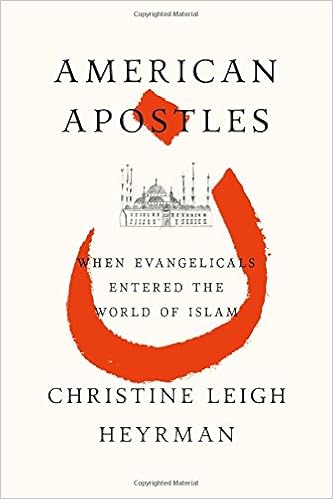
American religion is very much “out in the world,” as panels in Dallas amply demonstrated.  S-USIH conference presenters operate in the jet stream of Andrew Preston’s Sword of the Spirit, Shield of Faith: Religion in American War and Diplomacy and David Hollinger’s Protestants Abroad: How Missionaries Tried to Change the World but Changed America. Woodrow Wilson’s social gospel now plays an important role in American empire (Cara Burnidge), missionaries imbued science in Hawaii with the divine (Tracy Laevelle), and religion, of course, also challenged empire (Ray Haberski). As mentioned above, Lauren Turek’s work brings the fields of American religion and international human rights history into conversation. Emily Conroy-Krutz’s paper on the state of the field panel considered how recent books by Christine Heyrman and Michael Altman study religion abroad to illumine religious issues in America. Conroy-Krutz makes the important point that recent scholarship has portrayed missionaries both as purveyors of bias and important sources of cosmopolitanism.  The subjects we study in the field of American religious history go out into the world and think about a wide range of issues. Religion is exported as well as imported.


Image result for mike altman hindooImage result for christine heyrman islam

Women’s and gender history intersected with long-standing research trends in the field of American Intellectual and religious history.  These approaches are producing new insights into old questions. Erin Bartram offered an analysis of how gender shapes the construction of the female self in the nineteenth century. Religion and religious questions are involved in the construction of the self and the recognition of boundaries between the individual and society. Elesha Coffman discussed the ways the legacy of Betty Friedan occluded historians’ understandings of Margaret Mead, the subject of her new book Oxford’s Spirited Lives series. Andrea Turpin’s paper considered women from both sides of the Fundamentalist-Modernist controversy. Elizabeth H. Flowers asked why women were so involved in spreading the doctrine of inerrancy in the late twentieth century. Karen K. Seat looked at how ideas of women’s labor helped to explain the general turn towards neo-conservative policy during and after the Reagan era. These papers demonstrated that women thinkers and ideas about gender shaped key trends in American history: the rise of the self, fundamentalism, the rise of the right, second wave feminism, and neoliberalism.


spacer