 |
| Isaac Hecker, circa 1890 |
In the spirit of RiAH's 10 year anniversary, we welcome a guest post from historian William Cossen. You can follow him at www.williamscossen.com and on Twitter @WilliamCossen.What do historians of Catholicism owe to the saints about whom they write?
This question has been on my mind since the American Catholic Historical Association’s Annual Meeting in Denver this past January. Two moments at the conference together served for me as the genesis of this question. The first moment took the form of a comment from Thomas Rzeznik during his presentation for the ACHA’s presidential roundtable, about which I have written in more detail on John Fea’s Way of Improvement Leads Home blog. Rzeznik noted that scholars of Catholicism should remain mindful of the multiple audiences they serve through their research and writing: the academy, the institutional church, and interested laypeople.
The second moment emerged following my own panel on Catholicism and Americanism. I had a conversation on the state of the field of Catholic history with the panel’s organizer, Erin Bartram. Both of our papers dealt with Isaac Hecker, a central figure in the study of mid- to late nineteenth-century U.S. Catholic history, and we briefly pondered the nature of writing about an individual such as Hecker, who is presently being investigated for potential canonization.
It is obviously not uncommon for historians of Catholicism to write about men and women who have been recognized as saints by the Catholic Church. This may be somewhat rarer in scholarship on U.S. Catholicism, which reflects the fewer canonized saints from the United States than from other countries with longer histories of an extensive Catholic presence. There are, however, several fine examples of recent historical scholarship that include canonized (or soon-to-be canonized) Catholics as central figures in their narratives.
Why this has been on my mind is that my research on Hecker could have the potential to turn up what may be, at least to present-day observers, unflattering information on this Servant of God (an initial step in the process of canonization). While Hecker’s life has been examined as part of the history of transcendentalism, the religious conversion experience, and the Americanist controversy within late nineteenth-century Catholicism, my research on Hecker explores how his writings and their intellectual legacy intersected with ideologies of race and growing American imperialism during the same period. Remaining mindful of the multiple audiences of a scholar of Catholicism, I want to employ a rigorous methodology befitting an academic historian. I also want to provide a more detailed picture of Hecker that is neither hagiographical nor exaggeratedly critical, recognizing that the institutional church and Hecker’s canonization promoters may be undertaking the simultaneous process of writing their own histories of Hecker. Following Pope John Paul II’s reform of the canonization process in 1983, religion journalist Kenneth L. Woodward writes, the Catholic Church’s saint-makers began “employ[ing] the academic model of researching and writing a doctoral dissertation. Hereafter, causes would be accepted or rejected according to the standards of critical historiography.” In contemporary saint-making, individuals involved with the formal canonization process as well as academic historians operating outside the church’s institutional structures are all involved in creating saintly historiographies that may or may not exist at odds with one another.
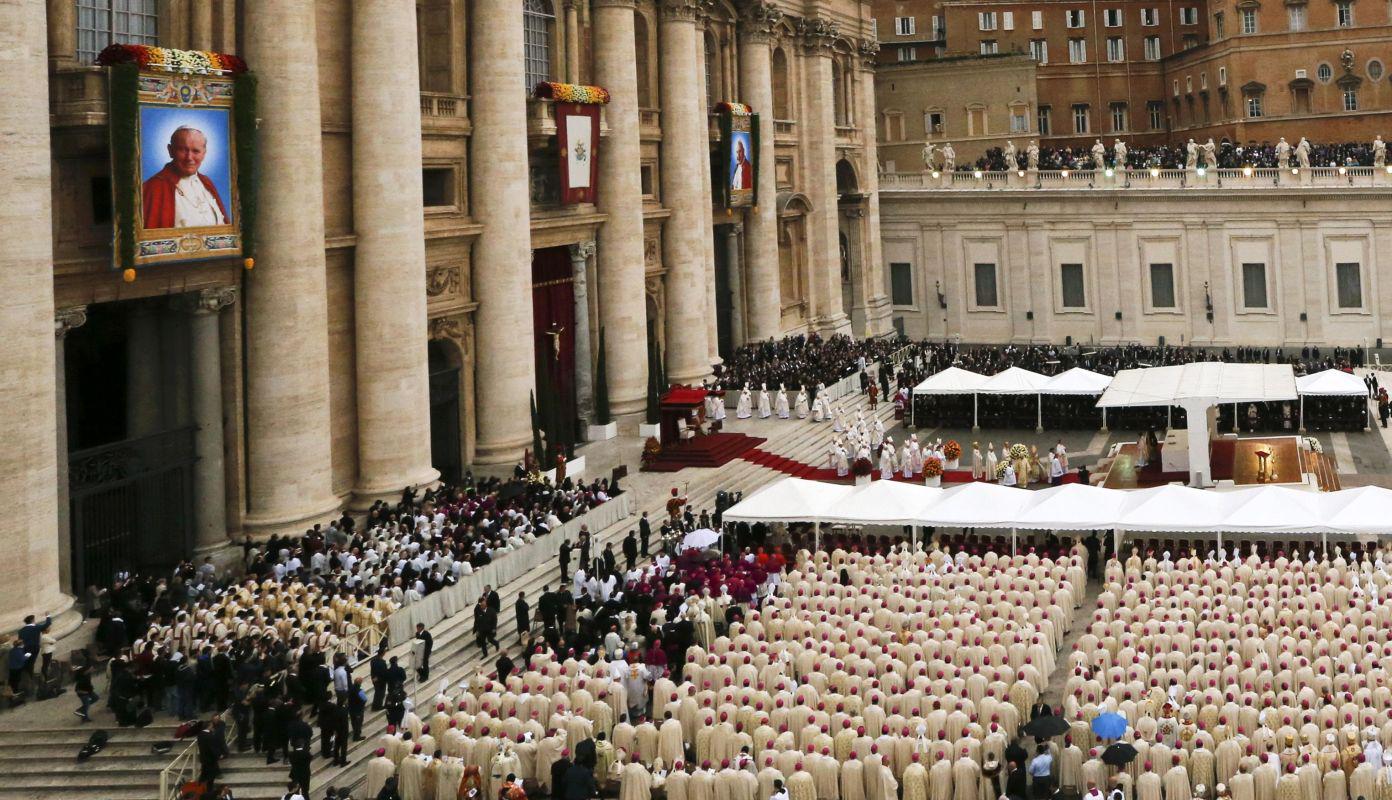
Subsequent to the ostensible historicizing and de-hagiographizing of the saint-making process, can non-church-affiliated, academic historians now function as unofficial and even unwitting promoters of a would-be saint’s canonization (if the history produced depicts saintliness) or as devil’s advocates (if the narrative produced depicts something else entirely)? To what extent should (or even can) academic historians of Catholicism, when aware of an ongoing sainthood investigation for one of their scholarly subjects, let this knowledge play a role in shaping their narratives? Can such a consideration be avoided once this knowledge has been attained?
It can be easy to lose sight of the constructedness of saints and especially of historians’ roles in the work of such construction. Sociologist Pierre Delooz argues that “all saints are more or less constructed in that, being necessarily saints for other people, they are remodelled in the collective representation which is made of them.” This project, though, did not cease in some remote past when the stories of saints were being written by hagiographers but rather continues to the present with the stories of saints being written by historians. Saint-making and saint-unmaking are not discrete moments with discernible temporal boundaries but are rather ongoing projects of which historians are a part. “Hagiography,” religion scholar Robert A. Orsi writes,” is best understood as a creative process that goes on and on in the circumstances of everyday life.” It is not just devotees of the saints, however, who participate in this “creative process.” Historians also play a central role in contextualizing the saints, separating myth from fact, revising the narratives of their lives, and at times recreating their hagiographies. This scholarly production of saints is a reason why, as Orsi describes, “holy figures get caught up and implicated in struggles on earth. They bear the marks of history.” In describing the emergence in the early modern period of professional medical expertise as a required component of canonization investigations, historian Bradford Bouley explains, “[J]udging a prospective corpse during a canonization proceeding was not a simple act where the evidence at hand was easily reduced to a comprehensible category. Rather, it was a process of negotiation in which the various demands of the community, the faith, and the practice of medicine conditioned the ways in which the truth of the saintly body was understood.” The ongoing practice of saint-remaking is similarly a negotiated undertaking carried out as a dialogue between historians, their subjects, and their various audiences.
 |
| The canonizaiton of John Paul II and John XXIII |
And what about that third audience that Rzeznik mentioned? Interested laypeople. Not only does the religious order Hecker founded, the Paulist Fathers, still operate actively, but Hecker must remain for some a figure of veneration with a fama sanctitatis (reputation for holiness) that would justify his cause for canonization. The balance I am trying to strike between respect for Hecker the historical figure, respect for lay and clerical Catholics who may venerate him, and respect for the historical method, is a tenuous one. I do not want to alienate this third audience if my scholarship casts Hecker in a negative light, but I also owe this audience, my other audiences, and Hecker an honest review of the primary sources wherever they may lead. This consideration gives me pause to think about why a religious figure and their present-day admirers should command any more historical respect than their secular counterparts. Is this just an unconscious blinder worn by historians of explicitly religious figures? That is, do we ever adopt an additional degree of caution when analyzing religious subjects compared to non-religious subjects, even though the categories of religious and non-religious are themselves continually made and remade historically and historiographically?
In 1918, a piece in
The Catholic Historical Review reflected on the effect of techniques of higher criticism being brought to bear on the histories of saints. The unnamed author wrote that “American Catholic history thus far is largely biographical, and it is from the published lives of the leaders of the Church here that the future historian will be compelled to gather the larger part of his materials.” They maintained that “if American Catholic history is to be protected against historiasters of the future,” historians of Catholicism must adopt a modern, rigorous, “technical method of research, of criticism, and of composition.” This methodology applied equally to the lives of avowedly religious figures as it did to ostensibly non-religious figures. The author argued that such a scientific method of historicizing necessarily entailed “criticism,” which, although “not the chief end of historical research,” was essential for the creation of an accurate narrative of the history of American Catholicism.”
This Progressive Era methodology of historical criticism of the church and its leading lights, however, was fraught with dangers to the historian. Jesuit author Hippolyte Delehaye, a specialist in the study of hagiography, wrote in his 1907 book The Legends of the Saints: An Introduction to Hagiography, that “[r]eligious-minded people who regard with equal veneration not only the saints themselves but everything associated with them,” were appalled by historically critical interpretations of saints’ lives. Delehaye was aware, then, of the multiple audiences of a historian of Catholicism; in this case, these audiences were academics practicing critical analysis and religious readers disturbed by an apparent undermining of saints’ cults. The historian writing from a critical perspective about a saint or potential saint is therefore open, Delehaye argued, to charges of irreligiosity and of harboring an anti-saint attitude. Delehaye thought this to be most unfortunate since many such historians, seeking only to treat their subjects and their discipline with respect, had been painted as “iconoclasts.”
Contemporary historians engaging in critical readings of figures regarded by some or many Catholics to be saints or at least saintly may face a difficult double bind: writing too positively about these individuals could lead to charges from fellow academics that they are writing hagiographies, and writing too negatively about them may lead to charges from these figures’ institutional and lay promoters that the historian has insufficiently respected the lived religious experiences of their subjects and their subjects’ devotees. This is essentially the challenge facing any scholar, historian Jill Lepore explains, when he or she is “[f]inding out and writing about people, living or dead.” In her 2001 article “Historians Who Love Too Much: Reflections on Microhistory and Biography,” Lepore writes, “It is necessary to balance intimacy with distance while at the same time being inquisitive to the point of invasiveness. Getting too close to your subject is a major danger, but not getting to know her well enough is just as likely.” For scholars of Catholicism, these difficulties may be rooted in the sense that hagiography and history can be neatly dichotomized, a position which would reveal a somewhat hubristic view of modern historians operating above hagiography and older hagiographers being incapable of writing accurate history. I would like to suggest that there exists a finer line between the two narrative forms than may be acknowledged at first glance. Jesuit scholar Michel de Certeau argues in The Writing of History that hagiography’s “combination of acts, places, and themes indicates a particular structure that refers not just primarily to ‘what took place,’ as does history, but to ‘what is exemplary.’” From this perspective, the hagiographer is grappling just as much as is the historian with the challenge of creating for readers a usable past.
Whether a scholar of religion approaches her or his subjects from a position of methodological atheism or agnosticism or out of the belief that the presence of the supernatural in the world is a historical fact, this same scholar must reckon with the reality and associated responsibility that her or his scholarship can play a role, whether directly or indirectly, in shaping the historical memory, the prospects for canonization, and the nature of the veneration of a figure regarded by people of faith as a saint transcending history.
Bill graduated with a PhD in history from Penn State University in December 2016. He serves as the book review editor for H-SHGAPE (Society for Historians of the Gilded Age and Progressive Era) and is a member of the faculty of The Gwinnett School of Mathematics, Science, and Technology. His articles have been published in American Catholic Studies, The South Carolina Historical Magazine, and U.S. Catholic Historian, and he has an article on Catholic labor schools forthcoming in The Catholic Historical Review. Cossen is currently revising his first book manuscript, which is titled Making Catholic America: Religious Nationalism in the Gilded Age and Progressive Era.--------
Notes
Dr. Bartram gave me permission to mention this conversation. See author’s personal correspondence, June 23, 2017.
Examples include Anne M. Boylan,
The Origins of Women’s Activism: New York and Boston, 1797-1840 (Chapel Hill: The University of North Carolina Press, 2002), 101-109, 118-124 [on Elizabeth Ann Bayley Seton]; Allan Greer, “Natives and Nationalism: The Americanization of Kateri Tekakwitha,”
The Catholic Historical Review 90, no. 2 (April 2004): 260-272; Greer,
Mohawk Saint: Catherine Tekakwitha and the Jesuits (New York: Oxford University Press, 2005); Robert A. Orsi,
Between Heaven and Earth: The Religious Worlds People Make and the Scholars Who Study Them (Princeton, NJ: Princeton University Press, 2005), 110-145 [on Gemma Galgani].
On the historical development of the saint-making process, see Pierre Delooz, “Towards a Sociological Study of Canonized Sainthood in the Catholic Church,” in
Saints and Their Cults: Studies in Religious Sociology, Folklore and History, ed. Stephen Wilson (Cambridge, UK: Cambridge University Press, 1983): 189-216; Kenneth L. Woodward,
Making Saints: How the Catholic Church Determines Who Becomes a Saint, Who Doesn’t, and Why (New York: Simon and Schuster, 1990); Fernando Vidal, “Miracles, Science, and Testimony in Post-Tridentine Saint-Making,”
Science in Context 20, no. 3 (Sept. 2007): 481-508; Bradford Bouley, “Negotiated Sanctity: Incorruption, Community, and Medical Expertise,”
The Catholic Historical Review 102, no. 1 (Winter 2016): 1-25.
Woodward,
Making Saints, 91.
The formal power of the promotor fidei (popularly known as the devil’s advocate) was substantially diminished by the 1983 reform.
Delooz, “Towards a Sociological Study of Canonized Sainthood in the Catholic Church,” 195 [emphases in original].
Orsi,
Between Heaven and Earth, 4, 113.
Bouley, “Negotiated Sanctity,” 25.
“Historical Criticism,”
The Catholic Historical Review 3, no. 3 (Oct. 1917), 368.
Hippolyte Delehaye,
The Legends of the Saints: An Introduction to Hagiography, trans. V.M. Crawford (London: Longmans, Green, and Co., 1907), vii, viii. Delehaye defines “hagiography” as a form of writing of “a religious character” that “aim[ed] at edification” (2).
Jill Lepore, “Historians Who Love Too Much: Reflections on Microhistory and Biography,”
The Journal of American History 88, no. 1 (June 2001), 129.
Michel de Certeau,
The Writing of History, trans. Tom Conley (New York: Columbia University Press, 1988), 270.
On methodological atheism and agnosticism, see Michael A. Cantrell, “Must a Scholar of Religion Be Methodologically Atheistic or Agnostic?,”
Journal of the American Academy of Religion 84, no. 2 (June 2016): 373-400.
On historical presence, see Orsi,
Between Heaven and Earth; Orsi,
History and Presence (Cambridge, MA: The Belknap Press of Harvard University Press, 2016). This scholarly reckoning represents an example of “abundant historiography,” which Orsi describes as “approaching events that are not safely cordoned off in the past, that are not purified, but whose routes extend into the present, into the writing of history itself.” See Orsi,
History and Presence, 71.



