Showing posts with label RiAH reflections. Show all posts

RiAH @ 10: Celebrating Community

Monica L. Mercado

Finding community (at the Catholic
Summer School of America, 1897).
Where has the time gone? As July comes to an end, I've been catching up on the many tributes to our humble blog and blogmeister(s) during this tenth anniversary year, and coping with the waves of nostalgia that I feel looking at my very first RiAH blog post -- a summertime musing on a summertime history, that of the late nineteenth-century women of the Catholic Summer School of America. A few posts later, I remain grateful to this community for intellectual companionship and camaraderie, both online and off.

As a historian of women's religious and intellectual communities, it is perhaps no surprise that I first came to the blog seeking virtual community.

A Ph.D. student in a History department where very few students took religion seriously, I wondered what new work on women and gender in American religious history could look like, and years before I ever wrote for RiAH, I read and re-read and bookmarked posts like Kelly Baker's 2011 reflections on teaching religion and gender in American history and women's history month series (Introduction + Parts III, and III) -- a series that inspired Carol Faulkner's 2015 interviews with scholars on their favorite books about women in American religion. If you look at the "gender and religion" and "women's history" tags on this blog, some of my favorite posts of the last ten years pop up: from Janine Giordano's analysis of the Susan B. Anthony List to Laura Liebman's history of religion and cosmetics, Katie Lofton's thoughts on purity and soap opera sex, and Rachel Lindsey on boobs, just to name a few. In recent months, new contributor Andrea Turpin has continued to make RiAH a place I turn to for conversation partners in women's history. I'm proud to have added to the conversation, too, most recently "mapping the women" for this year's roundtable on Kyle Roberts' new book, Evangelical Gotham. (We are #amrelwomen, hear us roar.)

The attention to marginalized subjects such as women and gender doesn't just happen in a group blog,  it's a testament to the community of writers the editors have cultivated at this address. Better yet, RiAH has never had to be told that women also know history. So thank you to Paul Harvey, for your vision and virtual mentorship; to Heath Carter, who solicited my first guest post on those summer stories; and to Ed Blum who got me on the contributors roster in 2013 by telling Paul that I was "this ridiculously interesting U Chicago PhD student who is doing all this neat work." (May I someday live up to such potential!)  Happy birthday, Religion in American History.
spacer

RiAH @ 10: Untied

Today's guest post comes from someone who probably needs no introduction to readers. Kathryn Lofton wears many hats at Yale University (including Professor of Religious Studies, American Studies, and History, Chair of the Department of Religious Studies, and Deputy Dean for Diversity and Faculty Development). In these roles and more informal ones, she has contributed to the study of American religion in a number of ways, such as her first book, Oprah: Gospel of an Icon, her forthcoming book, Consuming Religion, and her co-editing of Frequencies: A Genealogy of Spirituality and Chicago book series, Class 200, (both) with John Lardas Modern. To my mind, though, these formal contributions (while impressive in their own right) barely scratch the surface of KL's gifts to our group blog and in our shared field of American religion. Thanks, Katie, for your reflection and your support of our digital community!


Kathryn Lofton 

I used to dislike Terry Gross. I probably still do. But I’ve outgrown some of my harshness. Or maybe it’s that I’ve stopped listening to her and focus now on the person to whom she speaks? Instead of ranting to friends about the guiltless ignorance of white liberalism, I now report on things I heard someone said on Fresh Air. I’ve become, in other words, the very person I used to decry.

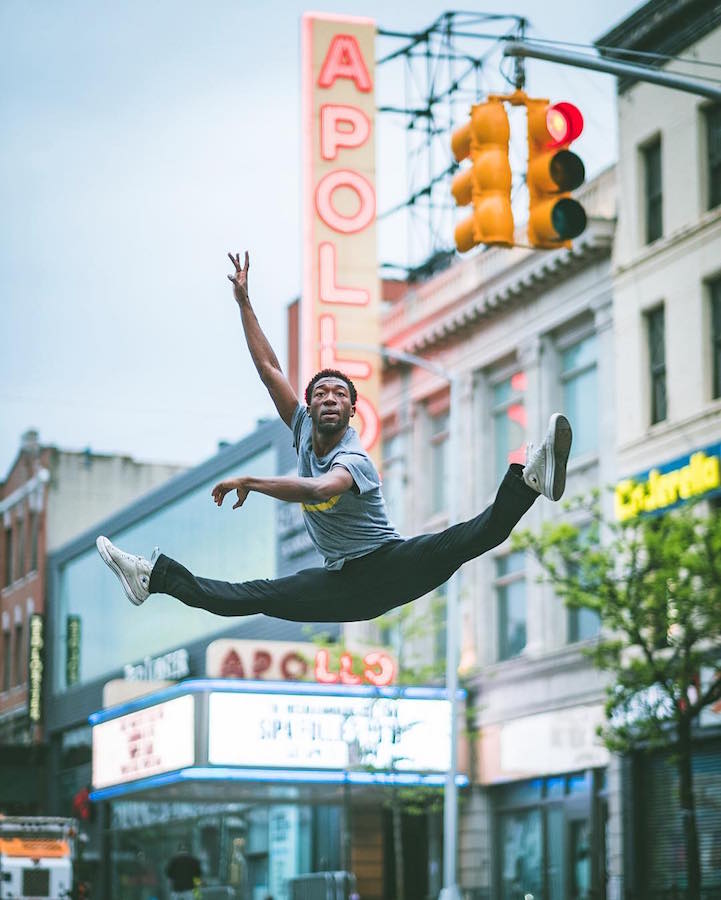
Photo Credit: Omar Z. Robles. "Breathtaking
Portraits Capture Ballet's Finest Dancing
on the Streets of New York," My Modern MET
This has happened many times in the last week, since Terry interviewed Wendy Whelan, the longtime principal dancer with the New York City Ballet. The interview coincided with the release of Restless Creature, a documentary that records the end of Whelan’s career with NYCB. Whelan is the ideal interview subject for Terry, inasmuch as she, Whelan, is so humane and creatively precise that her answers improve upon the dullness of Gross’s questions. At one point, Gross asks if Whelan found it hard to let go of her life as a ballerina. In reply, Whelan says: “I had been strapped in, you know, physically, strapped into pointe shoes, strapped into a leotard and tights, my hair’s been strapped up for my whole entire life. I don’t like to be constricted now, but that was safe, then. I was terrified to be un-constructed, and now I don’t know another way I’d rather be.”

I am not a ballet dancer. I have never known what it is like to wrap pointe shoes onto my feet and stand at a barre for eight hours a day. I have never ever worn my hair in a bun. And I will likely never do anything as well as Wendy Whelan dances. Yet when I heard Whelan talk about taking off the pieces of her constraint, I felt something so acutely kindred I had to press pause, rewind 15 seconds, and hear it again.


In the fall of 2007, I was on sabbatical and had no idea what to do. I had several different short writing projects due, but really I was supposed to be using this one semester off to write a book I did not want to write. Outside I maintained a careful performance of approved productivity. Inside I despaired. I hated the thing I thought I was supposed to do precisely because it was what I thought I had to do. I had no solutions other than doing more of the same. At least that will keep me employed, I thought. Even if it’s terrible, even if I think it’s as banal as Terry Gross’s questions, making something is better than nothing.

Then I got an e-mail from Paul Harvey saying I was welcome to post to his blog. “This is just a chance to post short and informal thoughts about your work if you're interested,” he wrote. At the time, I never said no to anything. So the question wasn’t whether or not I would post something, but whether it would be again—like so many other things I did—something I did because I thought I had no power. Or would it be something I did because I wanted to find some semblance of power through words, through community, through the randomness of play.

We don’t speak enough about how academic culture is a culture of constraint. We don’t say enough what it does to our minds and our bodies to be so determined by our ability to submit to constraints. We speak too fondly by half of our freedoms and not well enough, or often enough, about the marks it leaves at the end of the day to be so hemmed in by hierarchy, etiquette, tradition, and authority. In fall 2007 Paul Harvey said I could try my hand at informal ways of being nerdy and for me this was like inviting a ballerina to do the jitterbug. I wrote some goofy pieces about Evel Knievel, Joe Francis, and Frank Rich, and within months I had recalibrated myself. The gift of informality he offered was an invitation to find another way to speak. This informality gave me a new eye to the purpose of formality. How formality could be a choice and a strategy and not just subjection. Every young nerd deserves this gift, this opportunity to see who you can be unstrapped from the ties that bind.

spacer

RiAH @ 10: Public Scholarship & Liberation

Today's guest post comes from former Blogmeister Kelly Baker. Soon after Paul began the Religion in American History blog, Kelly became co-editor alongside him. As she describes below, her posts were varied in their topics, but each helped to expand and solidify an American Religion digital community. You can read her past posts under the tag Baker's posts and you can follow her writing career through her website or Tiny Letter.  Thanks, Kelly, for these reflections and all of your hard work in establishing this community of scholars!
 

Kelly J. Baker

In the summer of 2007, I decided to start my own blog on American religious history. I was sort of shocked that no one had started one yet because blogs were a thing that even academics knew existed. To make sure that no American religions blog existed, I did one quick Google search. Paul Harvey had beat me to the punch. He had just started a blog called Religion in American History, and he outranked me. He was a full professor with groundbreaking books, and I was upstart graduate student trying valiantly to do other types of writing to procrastinate on working on my dissertation about the 1920s Klan. In a brave moment, I decided to email Paul to ask if I could write for him. I refreshed my email until he responded with an offer to write for him. I, of course, took Paul up on his kind offer. My first post for RiAH was about religion and romance novels.

What I didn’t realize then is that writing for RiAH would allow me to write about about American religions for a broader audience than my scholarship allowed and that I would end up with Paul as a valuable mentor and champion for my work. Having Paul in my corner made me a better scholar and a better writer. Becoming colleagues and friends with other contributors at RiAH was crucial for me as I finished my dissertation and moved onto various lecturer positions. I ended up with fabulous conversation partners like Ed Blum, Emily Clark, Darren Grem, and Mike Altman.

As I wrote for RiAH as a contributor, then as assistant editor, and then, as an editor in my own right, I gained confidence about not only my research, but also my ability to write. Writing short posts for the blog about everything from the Klan to bad movie remakes of John Grisham novels to Sarah Palin to documentaries and popular culture was fun, but it also forced me to consider what an audience might want to learn and what they might gain from reading posts that I wrote.  Taking my training as a religious studies scholar and applying it to topics beyond what I happened to research made me realize that I had more to offer than scholarly articles, monographs, and books reviews. I had things to say beyond what I was expected to write for my peers.

It was liberating to realize that I could write beyond the topic of my dissertation and later book on the Klan. Writing for RiAH was the first step in realizing that I had career options beyond the academic path that I trained for. I learned to write beyond disciplinary conventions to engage readers who weren’t American religious historians. I learned how to do public scholarship before I knew that was what I was doing.

Writing for RiAH allowed me to become the writer and editor that I am now. When I decided to transition out of academia, I started writing about my transition publicly because I was already comfortable writing for a public audience. I did what I often did when I faced a research problem I couldn’t figure out; I wrote through it. And writing through it led to job opportunities that I couldn’t imagine until someone offered them to me. My training as a researcher and analyst allowed me to shift to other areas of expertise, which I wouldn’t have done without writing for Paul and RiAH first.

More than that, all the blog posts I wrote convinced me that my expertise in American religious history was important and necessary to larger public discussions about nationalism, white supremacy, and politics. What I learned through my research mattered. RiAH taught me that, and I’m so glad that the blog that was such a lifeline for me is celebrating it’s tenth year.

Happy birthday, RiAH! And thank you, Paul, for taking a chance on me. I’ll never forget it.


spacer

A Decade with Religion in American History

Emily Suzanne Clark 

As other posts this month have noted, this is the 10th birthday for the Religion in American History blog and here's another post on that topic. I didn't start reading the blog until it was in year three when I was a first-year Ph.D. student, and the blog helped me figure out the field of American religions and American religious history. I didn't start focusing on American religions until the middle of my M.A. program at the University of Missouri (I have Chip Callahan and Kristin Schwain to thank for that). Being a terminal M.A., the Religious Studies graduate program at Mizzou was small but mighty, so I wasn't really introduced to a community of American religions scholars until I started my Ph.D. work at FSU. Finding the blog at the same time really showed me how big and kind of intimidating this field was, but the blog immediately countered that intimidation with collegiality. 

I think a big reason for the collegiality of the blog is Paul Harvey, and to show my gratitude I've photoshopped a birthday hat on Omar (Paul's cat) to celebrate RiAH's birthday. The blog introduced me to new books in the field and new ideas about American religions. People typically posted about research, but the occasional teaching post was also incredibly helpful for me as a graduate student and instructor of my own undergraduate course. The blog posted calls for papers, announcements about conferences, and more. It helped me figure out how to really hit the ground running as a Ph.D. student in the field.

For the last seven years, I've been happy to participate on the blog and be part of this active community. Late in my first year at FSU, I became the managing editor of the Journal of Southern Religion and was asked to write a reflection post for RiAH on the special issue the journal did on Hurricane Katrina. Art Remillard posted it and Paul thanked me for it and told me to send him any other posts ideas I might have. I did, and upon his receipt of that first pitch/post, he asked if I wanted to become a contributor. This was a great opportunity for a graduate student, and I think it's important to note that Paul asked many graduate students to post on the blog (a tradition current blogmeister Cara Burnidge has kept going). And honestly, I think it helps keep networking in our subfield from feeling quite so smarmy

And it was through the blog that I first got to know Paul. I was never Paul's graduate student but he has been a big mentor to me: graciously reading works in progress, helping me network, and swapping injury reports (me soccer, him basketball). Ten years ago Paul asked on this blog, "anybody out there?" We answered, "Yep!" And the blog helped us continue that conversation in creative and collegial ways. Happy Birthday RiAH! And thanks Paul. 
spacer

Thanks, RiAH: A Brief Personal Reflection

Charles McCrary

I have appreciated the reflections on and odes to Religion in American History posted this month. It’s been edifying to read of the blog’s role in the lives of many of my colleagues and friends and to consider its place in our field. I’ll add my short reflection here. Personally, I don’t know the field without this blog. And really, in many ways, I know the field through this blog. In the summer of 2007, when the blog launched, I was not a scholar of religion. I was 17 years old, and I delivered the Fargo Forum to doorsteps in the wee hours of the morning and Rooty Tooty Fresh ‘N Fruity® pancakes to tabletops in the non-peak hours of the afternoon. Two years later, though, I was majoring in religion, entering my junior year, and trying to figure out what I would study in grad school. After various dalliances with Kierkegaard, Mādhyamikas, and early Christians (being an undergrad is great and weird), I decided to get serious with American religious history. But I didn’t know anyone who studied it. Or anything about it. My professors at the University of North Dakota, none of whom specialized in American religion, were willing to have very long office-hours conversations and work with me on directed independent readings. (It wasn’t until I went to another university, talked to new colleagues, and taught my own courses that I realized how truly and deeply generous with their time and patience my professors were. Shout out to regional state universities, small departments, and engaged teaching faculty.) But where did I find the books and articles to read? How did I know which scholars were working on this stuff? The short answer: the Religion in American History blog.

I started reading the blog regularly in the fall of 2009, and it shaped my earliest impressions of what it meant to study religion in America. Author interviews, book reviews, previews of new books, and conference recaps offered a window into a world I hadn’t yet entered. As I tried to figure out where I would go to grad school, I looked to the blog. I had read and enjoyed posts by Florida State students and graduates, especially Kelly Baker. So I looked up the program, read some of the professors’ books, and decided to apply. When I was an MA student at FSU, Kelly let me write a few guest posts. I worried that the posts weren’t good (looking back, I can confirm that they were not), but I’m grateful that the opportunity gave me the confidence to keep writing and keep working out ideas. And, more so, it made me feel like a part of a community, part of the “field.” After a very long guest post in spring 2014 about Ben Sasse (see a less typo-ridden, even longer version here), Paul invited me to join the regular roster. I’m always humbled and surprised and delighted when people contact me about my writing here, or mention a post at a conference reception, and I’ve made many friends and acquaintances through the community the blog fosters.

I don't think this blog should be taken, as the undergraduate me once took it, as a synecdoche for “the study of American religion.” It’s not that. But it is one prominent place in which those who study American religion have had their conversations. It’s where I and many others have been introduced to new books and ideas and people. It’s where we’ve self-promoted, tested ideas, and argued. Maybe it’s our field’s water cooler. Or the post office in our small town. I am not good at metaphors. In a post last year, I asked, “Are you talking to me?”, and I argued that this blog is one public, a discursive community organized by its own discourse, among many that constitute the larger public of “the field” (again, whatever that is). But the public is not just the speakers. More importantly, it’s the readers, the circulators (retweeters), those who are addressed. I’m grateful for the opportunity to write here, but I’m far more grateful for the opportunity to read, to be addressed. Thanks to Paul, Randall, Kelly, Cara, and everyone who has written here over the last decade. Thanks for talking to me.
spacer

RiAH at 10: On The Importance Of Book Links

Paul Putz


Paul Harvey signing books for
one of the members of his fan club
All this #10thAnniversay stuff has made me sentimental, so I went back and looked at my first RiAH blog post. It was posted in May 2013, and it involved a discussion of Kanye West, Jesus, and Paul Harvey's and Ed Blum's book The Color of Christ. Its sole redeeming quality, so far as I can tell, was that it included a link to the Amazon page for The Color of Christ. The lesson: post links to other people's books and they might let you write for their blog.

For me the best part of RiAH has been the people who come with it, the online network of scholars who write, read, or comment on the blog. Even unknown grad students like me can find a place at the table. Most of the conference panels in which I've participated and the research ideas I've pursued (including my switch in dissertation topics) have been influenced in some way by people I've connected with because of RiAH. While I'm lucky that my home institution provides a supportive environment for grad students, the academic world outside Baylor has felt like a warm and inviting place largely because of people I've met through RiAH.

It's also thanks to RiAH that other scholars in the field have any clue who I am. They may not know what I research, but they sometimes have a vague sense that I might be the person who compiles lists of new and forthcoming books for RiAH. Apparently the lesson I learned from my first post, that linking to other people's books can bring goodwill, has stuck with me.

I started writing for RiAH the summer before I entered the PhD program at Baylor. It's now the summer before my last year, and here I am. RiAH has been one of the constants of my PhD experience, and all for the good. Thanks to Paul Harvey for starting this thing and thanks to him and everyone else for making it a welcoming space for grad students to explore ideas, develop their voice, and become more comfortable in the strange world of academia.
spacer

RIAH @ 10: Wooooo!

Michael J. Altman

I wrote Paul an email saying something to the effect of:
“Hi, I’m Mike. Your blog ignores Asia. I can write about Asia.”
I still can’t believe Paul let me on this blog. The idea that you’d just give me the ability to post something without anyone reading it or editing it is insane. The freedom to just put ideas out there and then get a response from a ready-made audience who was interested. The challenge of figuring out how to provoke that audience, how to get them to engage, was intoxicating.

I’ve tried to walk a line between history and religious studies in my work. I learned how to walk that line by writing for this blog. How do I take the theoretical work I do and make it not just intelligible, but useful, for someone trained in a history department? What can I learn from these historians?

This blog is my academic baby book. I went from a baby just out of coursework to a professor with a published book. It’s all there in the posts. Along the way, this blog helped me find my voice. It allowed me to play, experiment, pick up this idea and set it back down again, and send up test balloons. I think it functioned that way for a lot of us young scholars and it still does. It’s an independent wrestling circuit where we can try out new moves, try on new characters, and see what really gets the crowd going. Paul Harvey is our Ric Flairthe world champion always willing to put the young talent over.

And that’s the real truth of this blog. It was Paul’s blog but it was never about Paul. There are senior scholars who publish as much as they possibly can. There are senior scholars who try to get others published as much as they can. Paul is the latter. I still can’t believe he let me write here. It was one of the best things that happened to me as a scholar.

There could have been less fantasy football, though.
spacer

Thoughts on Being "Laverne and Shirley" to Paul Harvey's "Happy Days"

John Fea

Paul Harvey is Cheers, I am Frasier. Harvey is Dallas, I am Knots Landing. Harvey is The Mary Tyler Moore Show, I am Rhoda (or maybe Lou Grant).

Hopefully you are picking up the theme.  My blog "The Way of Improvement Leads Home" will always be known as a somewhat inferior spin-off to Paul Harvey's "Religion in American History." (RiAH).

When I was asked to write something for the 10th anniversary of RiAH, I dug up an old post at The Way of Improvement Leads Home that captures my blogging journey and the role that Paul and RiAH has played in it. Here is a taste of that post: 

Whatever blogging "career" I might have I owe to Paul Harvey.  On July 5, 2007 I found Harvey's new blog (it was a solo operation then) called Religion in American History and wrote a comment on a post I liked on W.E.B. DuBois. Here is what I wrote: 

Paul: Great post. I found your blog on the Cliopatria blogroll and have enjoyed reading it so far. --John 

About an hour later, Paul responded: 

John: Thanks! Please spread the blog address to Am. religious history folks, and let me know if you have any interest in contributing to the blog -- Paul 

I decided to take the plunge and within a few days I was listed as the blog's first "Contributing Editor." On July 7, 2007 (7-7-07) I wrote my first blog post-- a review of a Boston Review essay by Lew Daly on Catholicism and the common good. I have since written 58 posts for Harvey's blog, including [at the time] one of his most popular, and still try to contribute something worthwhile every now and then.

Paul's vision for a blog that would combine opinion, news from the profession, historical reflection on current events, and new research seemed to be a wonderful outlet for my rather eclectic interests in American history, religious history, and academic life.  But I was also taken by the sense of community that Paul always fostered at the blog.  I tried to cultivate this kind of online community when I started The Way of Improvement Leads Home in 2008.

It has been very exciting to watch the RiAH grow and become a place where many younger scholars in the field can try out their ideas.  I know that this is the kind of online space Paul wanted to create back when he began this venture a decade ago.

I have not blogged at RiAH in a long time, but I still check-in every day.  I always learn something in the process.

Congratulations to all who have been involved in the leadership of RiAH--Paul Harvey, Kelly Baker, Randall Stephens, Cara Burnidge, and Michael Hammond (I hope I am not forgetting anyone here).  I think it is fair to say that your work has brought a new vibrancy to the field of American religious history and American history broadly.

And I will always be honored to be Trapper John M.D. to Paul Harvey's MASH!
spacer